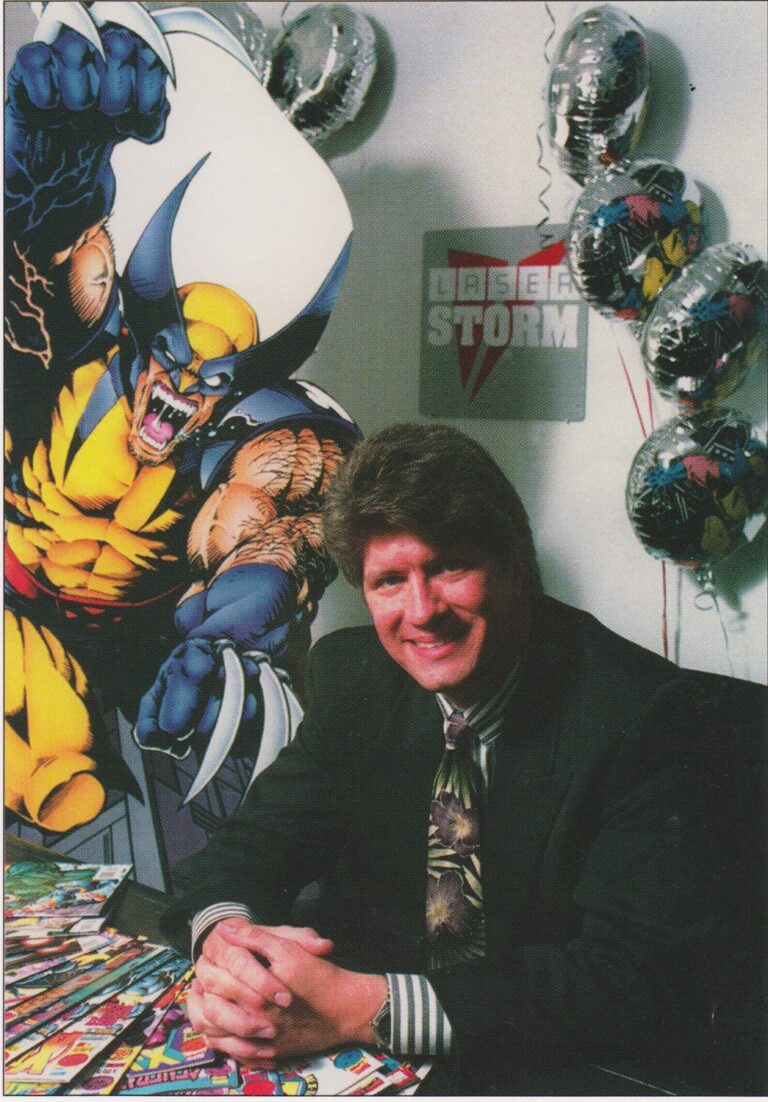
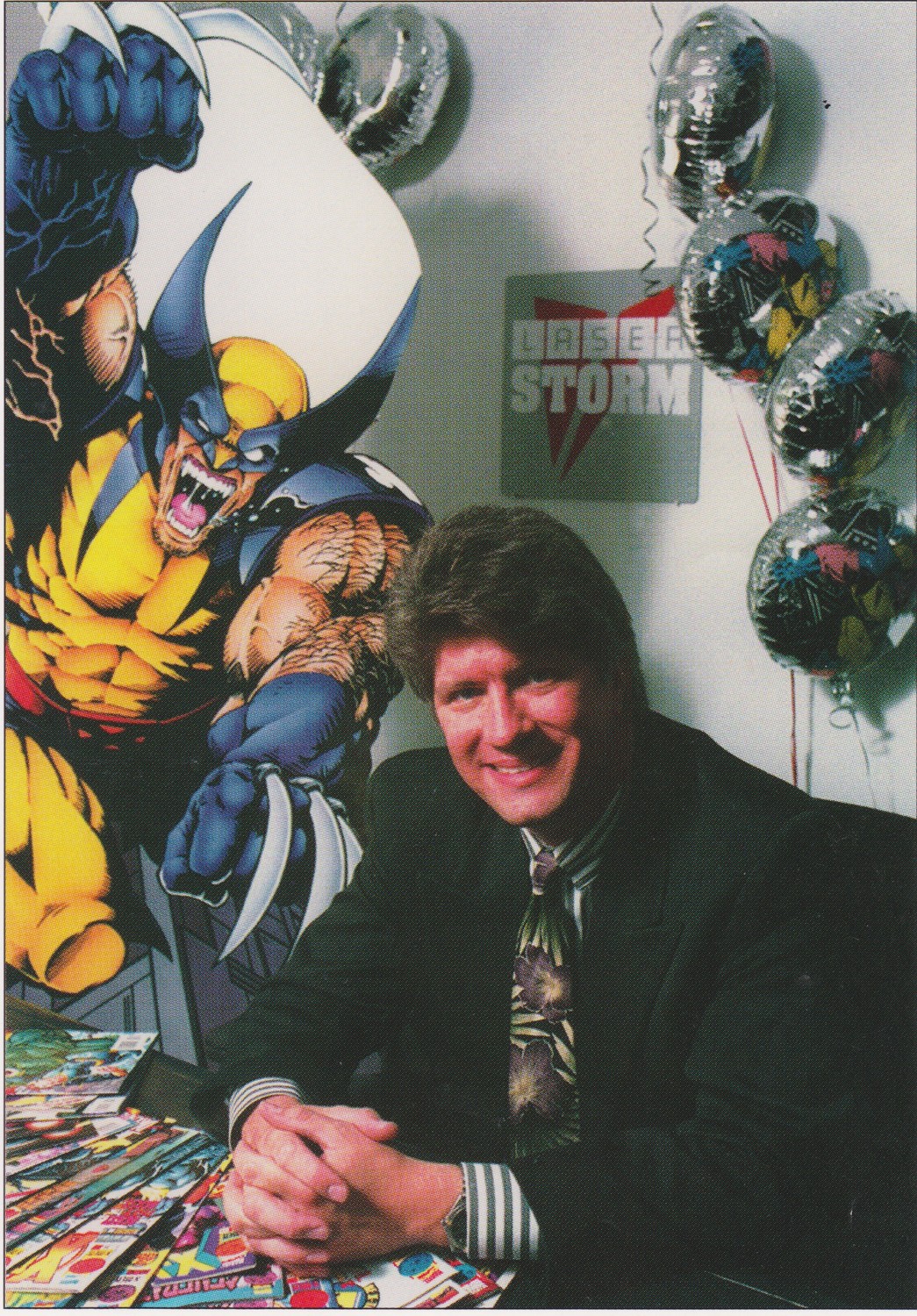
This is an excerpt from my forthcoming book, From Atoms to Bits: The Future of Downloadable Attractions. In the first section of the book, I unpack many of the lessons I learned as I built Laser Storm from a bootstrapped startup to one of the fastest-growing companies in America. Many of those lessons still apply today.
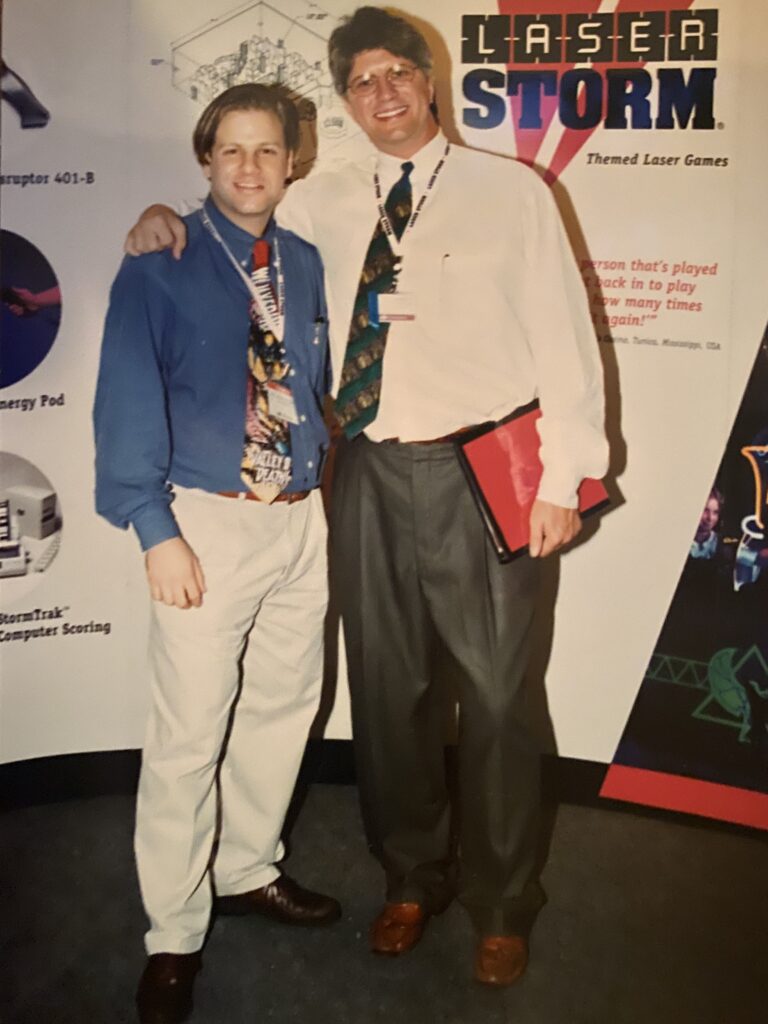
Thirty-five years after I launched Laser Storm at IAAPA in Orlando in 1991, laser tag is a staple attraction in almost every family entertainment center. Back then, finding the early adopters and convincing them to commit was a supreme challenge. We were fortunate enough to find some other visionaries who bought from us that first year. Andy Newman from Edison Brothers Stores, Ed Pearson from Seattle Fun Plex, and Don and Susan Perkins of Roll On America, outside of Boston, were our earliest customers and staunchest supporters. But if we were to survive and grow, we needed more.
Like many bootstrapped startups, we stretched every dollar that came in that first year after launch, barely surviving each month. By the end of September, both our lead pipeline and our bank account were nearly empty. We sat around our rented executive suite, pondering our options. Should we stretch our meager cash balance a few months, hoping for a miracle? Or should we take what we had, roll the dice, and head back to IAAPA, this time in Dallas, Texas?
It didn’t feel like a decision. Sitting around and hoping isn’t a strategy for success. We called IAAPA to see if they had space available. Unfortunately, the show was sold out, but they said we could have an outdoor space leading up to the entrance. We did the math and figured we could afford a 20×30 space, and we immediately went to work building a small demo arena so people could get a sense of what laser tag really felt like.
The prior year, we didn’t set up a way for people to play at the show. We didn’t understand how crucial it was for people actually to play the game. No words could do it justice. Like VR today, you have to experience it. We needed a different approach.
So I approached my friend Doc Watters, a local artist and fabricator, to help us design something we could set up in one day and give people a sense of how much fun Laser Storm was. He came up with a modular extruded aluminum trade show booth system that let us build a 600-square-foot enclosure with a couple of supports inside for stability. We blew fluorescent paint onto the walls using drinking straws, so it looked like a starscape when lit with blacklight. We suspended a few barriers inside so players could duck and hide. In a week of 20-hour days, we had a pop-up mini Laser Storm.
We loaded up a U-Haul truck for the twelve-hour drive to Dallas. There were four of us, as I remember it: Doc, my co-founder Ed Bonis, and our head of engineering, Dennis Potts. I drove the car down, and the others took turns driving the truck.
We were rolling down Interstate 25 towards Pueblo, Colorado, when the first of a series of unfortunate events took place. We were using walkie-talkies to communicate between vehicles, and Doc’s voice crackled with a message.
“We hit a deer! The truck is wrecked.”
We were already a few miles ahead of them. They told us to keep driving and get down to Dallas, and they’d be there as soon as they could. Luckily, nobody was hurt (well, except for the poor deer), and the gear inside was fine. Doc and Dennis waited for the U-Haul to bring another truck and transfer all the contents between the two. Ed and I drove on to Dallas.
We drove straight through and checked into the cheapest hotel we could find, the Econo Lodge. We staggered up to the reception desk, looking haggard after a 12-hour drive and a week of 20-hour days. The gentleman at the front desk asked if we wanted one bed or two. We looked at him sideways, and he asked, “Y’all are here for the gay rodeo, right?”
We chuckled and told him we were actually here for the IAAPA convention, and since there were four of us, we needed twin beds, plus could we get two roll-away beds? For the next week, four big dudes crammed into a small motel room with one bathroom. It didn’t really matter, though, as it turned out we’d be spending scant time there anyway.
As soon as the truck arrived, we headed to the convention center to start our setup. We were already a day behind and needed every hour we had. The space they gave us was along the outside of the building, about 100 yards from the entrance. Everyone coming to the show would have to walk past our booth to reach the lobby. Did we actually get lucky by waiting until the last minute to reserve a booth?
We worked until about 1 AM to get everything working. When we were done, we wrapped a giant blue tarp over the booth, securing it tightly to protect the electronics from both the elements and any curious opportunists that might wander by. We hadn’t eaten all day, so we all went to the Waffle House by the hotel, where, from midnight to 6 AM, they had an all-you-can-eat special for $5.99. We decided we could eat all three meals there in one sitting each day to save time and money.
The show was scheduled to start at 11 AM, but we wanted to get there early and make sure everything was still working, and polish up the display a bit. We spent the hours before the show making sure everything was perfect. Everything was working, and people started walking by and asking questions. We even had a line of people wanting to play. It was going to be a great show.
We initially decided to limit play to two at a time, as the space inside was pretty cramped. We just wanted to give them a tasted of what it was like. We figured that was enough to start a sales conversation. We let the first players in just as the show was opening. Two kids, maybe in their mid-teens, strapped on their phaser belts and headsets. We cranked up the fog machine so they could see the beams of light cutting across the arena. We hit the music, and the first laser battle at IAAPA ‘92 had begun.
I was standing outside talking to their parents, who owned a family entertainment center, when all of a sudden I heard a crash from inside the arena. One of the kids yelled, “Oh shit!” And then I heard the snapping.
It started slowly, “Snap.” Then a couple of seconds later, another “snap.” The next one came more quickly, and all of a sudden it was “snap, snap, pop, pop…” like Rice Krispies.
I ducked into the arena entrance and saw that one of the players had hit the support pole in the middle, knocking it out. That put too much stress on the connectors holding everything together, and they all started breaking. I held up the support strut with my back and yelled, “Get out!”
The kids vacated safely, and I quickly followed them, and the whole structure imploded.
We just stood there and stared at the rubble, numb. Thousands of people were now walking by, glancing at the wreckage. I snapped out of my trance long enough to take the Laser Storm banner and hide it. All I could think of was I didn’t want to be known as the company whose booth collapsed in the first 15 minutes of IAAPA.
The emotions of that moment were complex. There was relief that nobody was hurt. There was embarrassment. But I think the overwhelming feeling was one of defeat. We spent every last penny we had to get here. We were cooked. Laser Storm was dead.
To be continued… or join my Book Writing Space on LEXRA and get access to the rest of the story now.