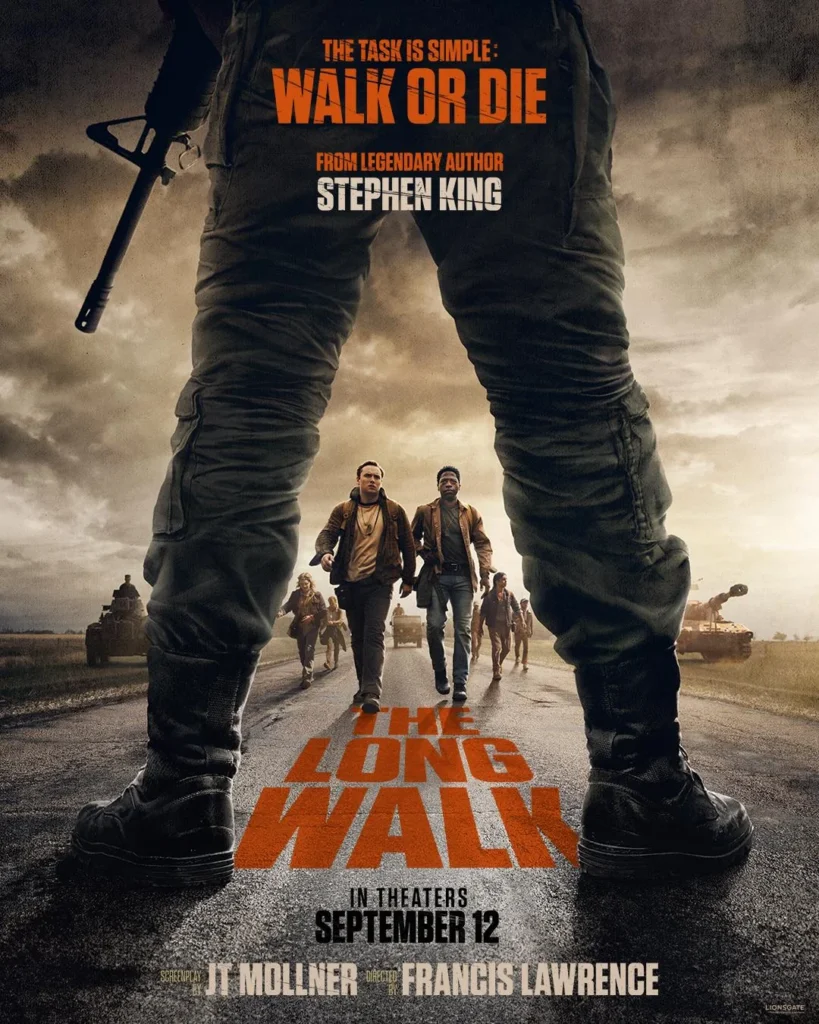
I don’t normally do movie reviews, and this is not the beginning of a trend, I promise. But I finally got around to watching The Long Walk last night. It’s streaming on HBO Max if you’re interested. I put this in the same class as movies like Schindler’s List, but it doesn’t quite elevate to that level of art. It’s one of those movies worth watching once, but, like all great art, it can be uncomfortable, especially if you take time to reflect on it afterward. As a warning, the violence is brutal and graphic by design. The director is taking you on a long walk while watching the movie. It’s quite an experience.
I will try to avoid major spoilers. Lots of people reviewed the movie and said it was bleak, and there’s definitely an opportunity to see it that way. My characterization of it would be somewhere between hopeful and challenging. And that’s the intersection that I want to talk about.
The Long Walk, released in 2025, is based on Stephen King’s very first novel of the same name. He wrote it in 1966 and 67 while he was a freshman at college at the age of 19. That, in and of itself, is remarkable. The original story is a reference to the Vietnam War. But this adaptation, 60 years later, is incredibly relevant today. It’s directed by Francis Lawrence, who did, amongst other films, the Hunger Games series. Lots of reviews have compared this to The Hunger Games. I think that’s a superficial comparison.
The story is set in an alternative version of 1970s America. There’s been what might be a civil war, or at least a polarizing one. The country has fallen into a financial depression. People are desperate, and The Long Walk offers 50:1 odds of escaping poverty. Teenage boys enter a lottery, and one from each of the United States is chosen. The game is painfully simple. You have to maintain a constant pace of at least 3 miles per hour. If your speed drops below that, you’re given a warning. After three warnings, they shoot you in the head. The last one alive is granted unimaginable wealth plus one wish.
Lesson 1: We are programmed to believe if we stop moving forward we die. Productivity over everything.
The Long Walk is run by The Major, played artfully by an unrecognizable Mark Hamill. The Major implores the walkers that they are helping “make America great again” (my words, not his). The country has fallen into despair. People aren’t motivated to work. They have no grit or determination, and so watching The Long Walk, which is televised, showing the will of fifty young men striving beyond the odds to pull themselves out of despair, will motivate the populace and reinvigorate the economy.
Lesson 2: It’s always about the economy. That’s the primary way the government in America is measured.
As The Long Walk begins, a group of four boys bonds to support one another. The East African proverb “If you want to go fast, go alone. If you want to go far, go together” comes to mind. Two of the boys become like brothers. They share their backstories over the days. One came from a series of foster homes and suffered horrible physical and mental abuse. His hope was to use the money to help others who were in his situation. The other boy is it is much more cynical and participating for more nefarious reasons. He recalls that his father told him that while joining the lottery for the long walk is voluntary, everybody does it. It’s become a societal expectation, so how voluntary is it, really? He asked if any of them knew someone who failed to volunteer. None had.
Lesson 3: The win/lose competitive mindset is a societal value. It’s hard to see alternatives when you’re programmed from birth.
As the crowd dwindles down to just a few boys left, the two main characters repeatedly save each other. The hopeful boy tries to encourage his cynical brother to see the good he could do if he wins. The cynical boy agrees to try. There are many poignant moments between them as they relate to each other on a human level. Despite the dystopian conditions they put themselves in.
Lesson 4: We can maintain our humanity, even in the worst of conditions. But the system makes it hard.
The ending of the movie differs from the book, and for the point of this post, it’s irrelevant, so I won’t spoil it. Suffice to say, it calls into question how even deeply held values can be abandoned in the right, or wrong, conditions. Which is probably what makes the movie so relevant today.
We are all on a version of The Long Walk. Global and national politics pit us against one another.
Nationalism
The human brain loves to categorize things. We classify plant and animal types. We separate people into races and nationalities. None of that is “natural.” It’s a weird quirk of the human brain.
Astronauts returning from space often talk about the “overview effect”. Author Frank White first coined the term in1987:
“There are no borders or boundaries on our planet except those that we create in our minds or through human behaviors. All the ideas and concepts that divide us when we are on the surface begin to fade from orbit and the moon. The result is a shift in worldview, and in identity.
William Shatner, who played Captain Kirk in Star Trek for decades after returning on the New Shepard spaceship, said,
”I discovered that the beauty isn’t out there, it’s down here, with all of us.”
The Final Frontier
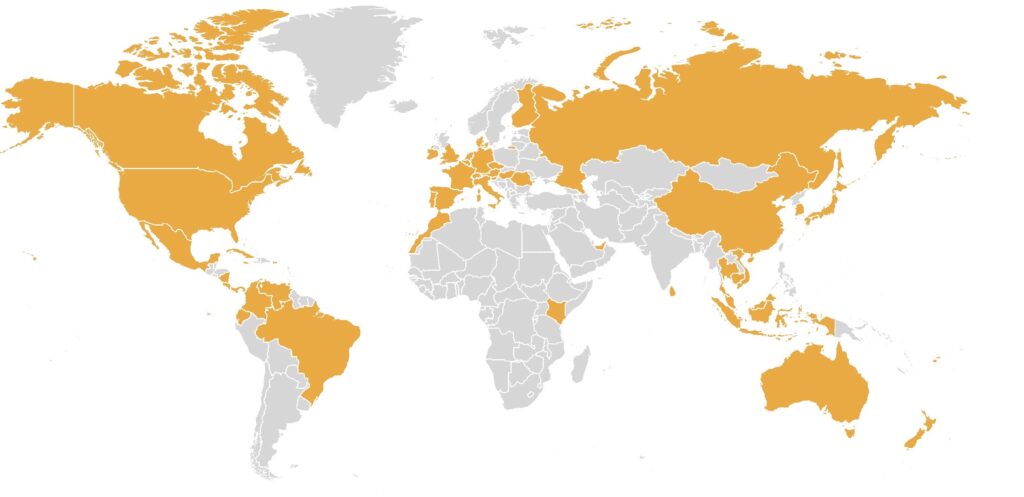
I haven’t been to space yet. I’ve thought a lot about whether I would go, given the chance. I definitely would, even if it was a one-way trip to Mars. That’s just the adventurer in me. But I think I’ve gotten my own version of the overview effect through traveling. I’ve been to 52 countries now, which is 26% of the globe. Even in the places where I most felt like I didn’t belong, I’ve gotten the sense that we are way more similar to one another than we are different.
In most cases, we’re trying to find happiness. Trying to survive and provide for our families. How we go about that can look wildly different. I’ve seen buffalo tenders sleeping in rice paddies in Southeast Asia. I’ve seen people shining shoes on a folding chair along a dusty sidewalk in Nairobi. I’ve met more Uber and taxi drivers than I can remember. Everywhere I go, people are hustling.
And then there are people on the other side of the spectrum: the billionaires, and for a brief moment last month, a trillionaire. Even they seem to be hustling. And they all believe they’re doing the right thing. Whatever that thing is. That’s the paradox of life; that even when we are violently opposed, we each think we are right. Which in the strangest way makes us all the same. Both you and Elon are hustling and believe you’re doing the right thing.
Earthlings
Like much of the planet, I’ve been following the World Cup games. Watching the passion of the crowds as they root for their national teams is interesting to me. I love Jerry Seinfeld’s line about professional sports. He says, “Really, you’re just rooting for laundry,” referring to the fact that players switch teams all the time. In this case, the laundry is emblazoned with a symbol and the national colors. Like colors can have a nationality.
Often, the passion for laundry turns into vitriol towards the opposing team’s players. Or to the referee, when a call doesn’t go their way. At its worst, it manifests as hooliganism, with riots breaking out between fans of opposing teams. I think the security around the World Cup generally prevents that from happening, but it’s well documented in Latin America and Europe.
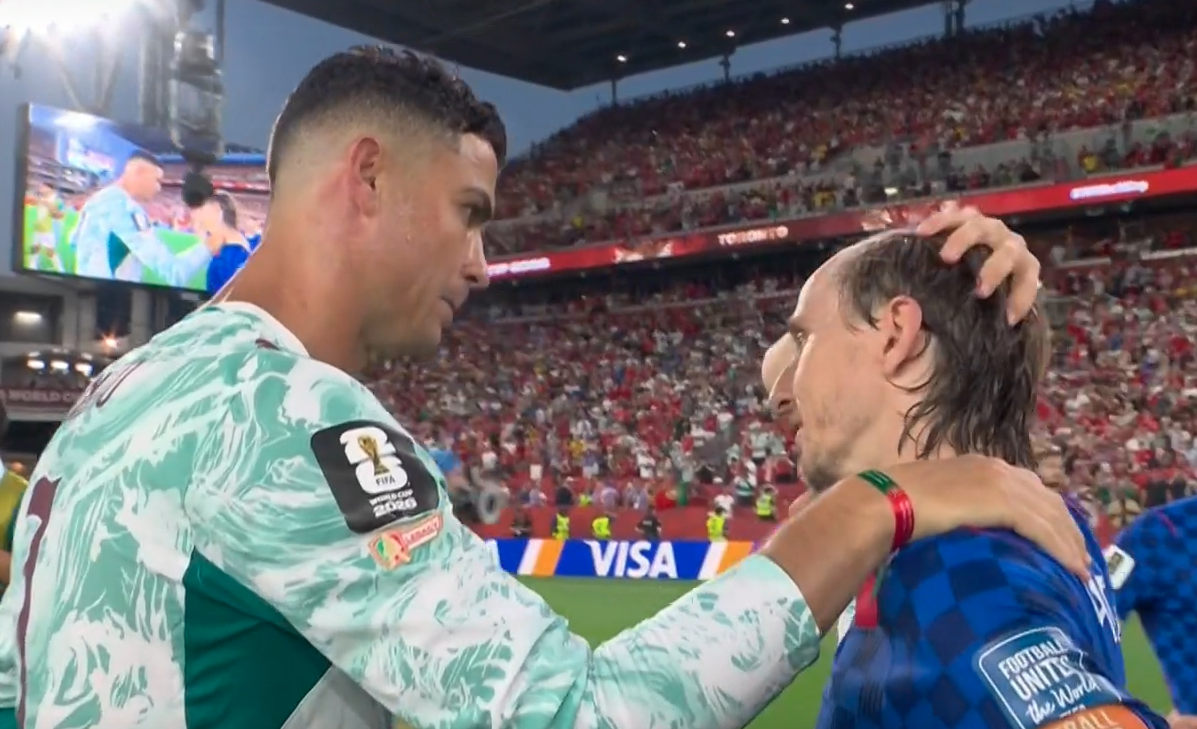
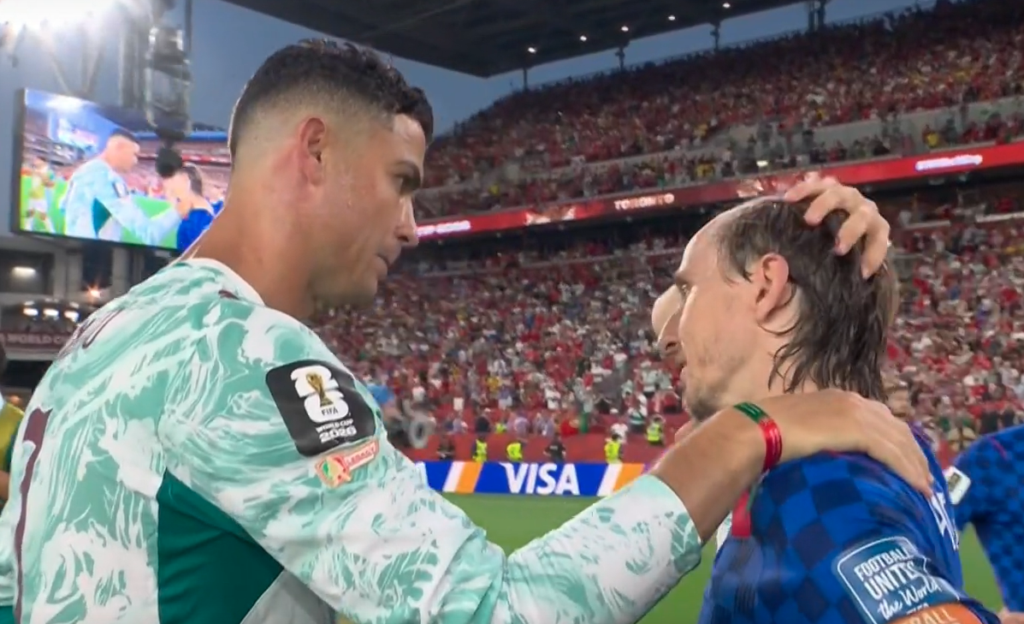
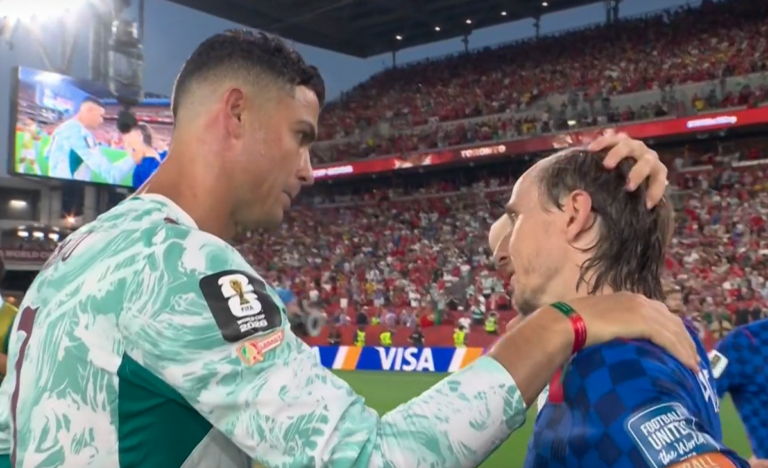
This past week, Portugal knocked out Croatia, effectively ending Luka Modric’s World Cup career at 40 years of age. While the Portugal players and fans celebrated, cameras captured Cristiano Ronaldo and Luka Modric together on the field. Two of the greatest to ever play the game started out as competitors in the Premier League, wound up as teammates at Real Madrid, all while competing against each other for their countries. In this moment, the laundry didn’t matter at all. Nor the nationality. Just two earthlings connecting with compassion and respect.
Innerspace
I’ve developed a daily meditation practice over the last ten years. It’s offered me the ability to cut through false perceptions and see that the nature of reality IS change. Nothing is constant. Even the most seemingly stable things, if you zoom in close enough, are just particles of energy spinning around themselves. But that’s not apparent, so we cling to the way things are.
People are really pissed off about the hydration breaks in the World Cup. They’re saying it breaks up the flow of the game. Others say it’s just a money grab for two minutes more of television advertising. Maybe both of those things are true. But everything changes.
If you pay close enough attention, you’ll find that everything you struggle with can be attributed to either,
Clinging to the way something was or “should be,” or
An aversion to the way things are.
The key to happiness is acceptance of what is. That doesn’t mean indifference or passivity. It just means, as my mom likes to say, “It is what it is.”
It is what it is – Bob’s Mom
By practicing acceptance, you can actually effect more change. You can see multiple perspectives, meet people with opposing views where they are, and increase your chance of changing their perspective. One of my favorite quotes from the Tao Te Ching is
What is a good man but a bad man’s teacher? What is a bad man but a good man’s job?
If you don’t understand this, you will get lost, however intelligent you are. It is the great secret.
– Lao Tzu
Happy birthday, USA
Today is the 250th birthday of the United States of America. I vaguely remember the bicentennial. I was a twelve-year-old boy, excited that they were bringing tall ships into New York Harbor for the July 4th celebration. I was too young to pay attention to politics, so I can’t really tell you what was going on. I do remember it was right after the Watergate scandal and the end of the Vietnam War. I can imagine the country was deeply divided. I’m sure that there was a distrust of the political system.
Over the ensuing fifty years, America went through a lot. Financially, there was a stock market crash, multiple banking crises, and an explosion in home ownership and stock market wealth creation. Geopolitically, there were oil shortages from the Iranian oil embargo in the 70s due to the hostage crisis. There was a massive Cold War and quite a few hot ones. There were the 9/11 terror attacks and the global COVID pandemic. And let’s not forget the creation of personal computers and Al Gore’s internet.
It’s impossible to predict what the next 50 years will look like. Some people predict America’s period of global dominance is coming to an end. Others think that the underlying system will continue to keep it at the forefront of the global economy and power. And others predict AI could end it all. We can only be sure that things will continue to change. America is always changing, just as you and I are. Because that’s the nature of all things. If you can be OK with that, you’ll find peace, no matter what happens.