I’ve been chatting on LinkedIn with someone who announced they’ve just received funding to build a “Premium Immersive VR Experience”. And I was curious what a premium immersive VR experience might be to them. And their answer was “a high-production, first-person cinematic experience that people would pay a significant amount to try, closer to a premium attraction or exclusive showcase than a regular consumer VR app. The goal is an experience where the user doesn’t just watch a story in a headset but feels presence as the main character with real-time emotional adaptation.”
So naturally, as someone who specializes in go-to-market strategy for VR and location-based entertainment, I asked about theirs. Their response was,
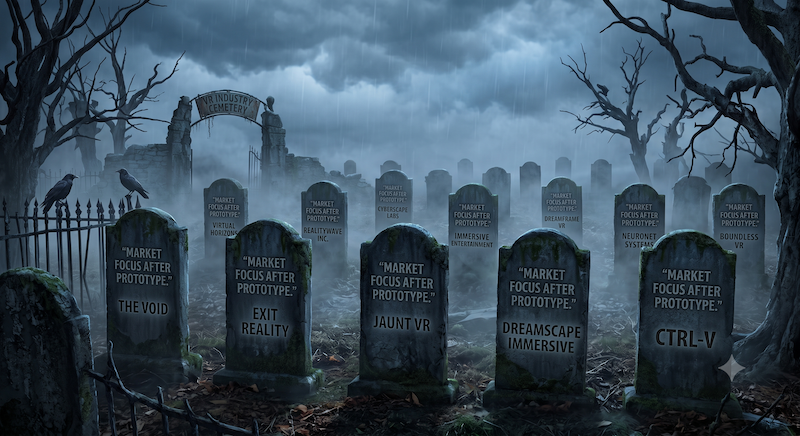
“Market focus after prototype”
This is the epitaph on the graves of so many VR companies I’ve seen over the last decade. They have an idea, they build a prototype, they raise money, then they’re like, “Okay, who’s gonna buy my stuff?” This is the VR version of the Greater Mousetrap Fallacy.
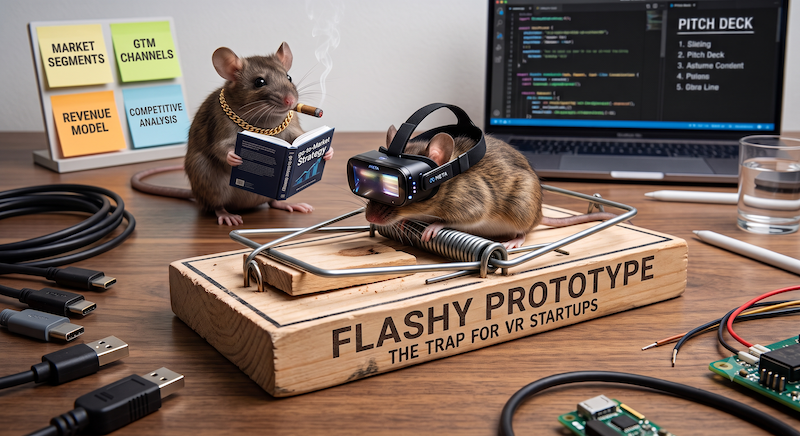
It’s been around since the 1960s and is used to describe companies that focus too much on product without understanding market needs. It’s a warning to entrepreneurs that great product design fails without marketing, distribution, and product-market fit. It was first coined by Theodore Levitt in his framework, “Marketing Myopia,” which looked at how actual mousetrap patents became a textbook example of this failure.
I always thought this was a metaphor until I looked it up. Got to love Google and AI. Turns out that the mousetrap is officially the most frequently invented device in United States history. Since the U.S. Patent and Trademark Office was established, it has granted over 4,400 independent patents for new mousetrap designs and receives about 400 new applications from optimistic inventors every year. Yet despite 4,400 patents issued, less than 25 designs have ever made their creators any money, and only two designs have ever dominated the commercial market.
The reason for this is that the original mousetrap patent costs pennies to make, sells for a buck or two, and does the job. To disintermediate that design from the market, the efficiency gain would have to be high enough to offset the increased manufacturing cost. That’s go-to-market strategy 101.
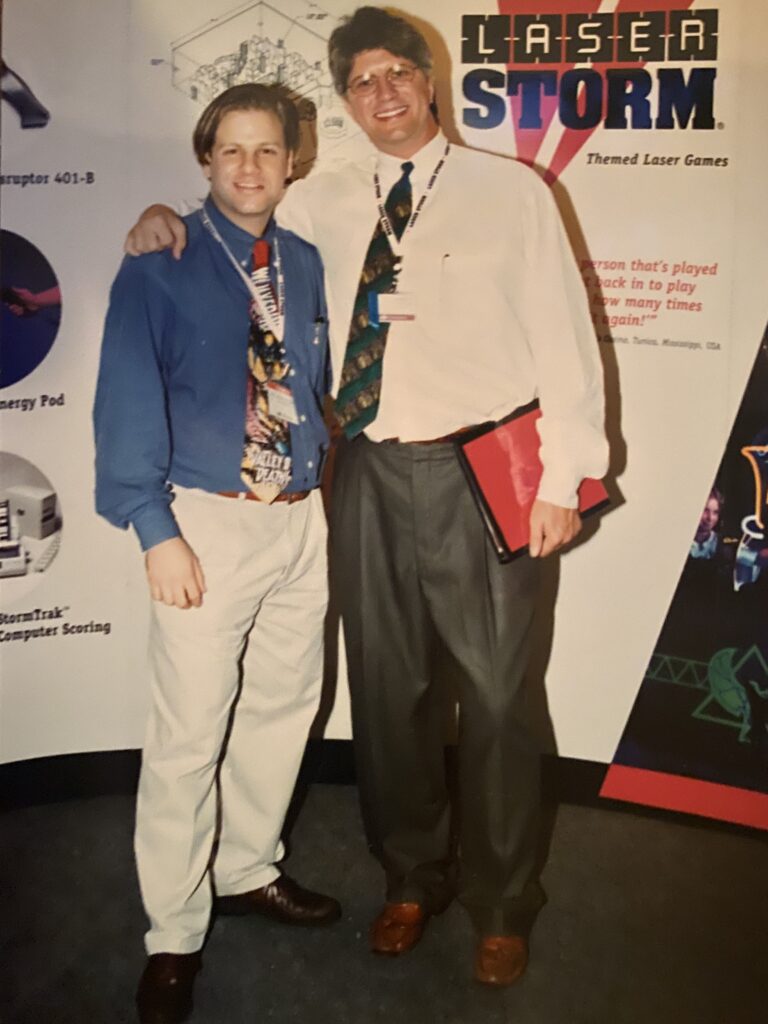
When I came up with Laser Storm, I started with the go-to-market strategy. I’d seen Photon, which was a 10,000-square-foot, $1 million investment albatross, and knew it would never make money. I’d come out of the high-volume pizza delivery business and understood efficiency, revenue per square foot, labor cost, cost of goods sold, etc. A blind pizza delivery driver could see that Photon couldn’t possibly make money and scale.
So I wondered: how could you create an experience that gave customers a similar feeling, and do it at an affordable price for everyone? Then we engineered the product to fit the go-to-market strategy. The result was a Laser tag system that cost $50,000 and could generate up to $500,000 a year in revenue. Laser Storm hit #251 on the Inc. 500 and pulled off a successful Nasdaq IPO in a market niche that didn’t exist six years earlier.
Yet entrepreneurs and inventors continue to spend incredible sums of money and time working on products without even thinking about their go-to-market. I can only come up with two reasons for this.
I understand the first one, except I wrote a book on how to do it, which I give away for free, or you can buy on Amazon for less than $20. The second one I chalk up to the naivety of most entrepreneurs who, if they actually knew what they were getting into, would never start their businesses in the first place. I still fall for that one all the time.
Smart money doesn’t invest in companies without a solid go-to-market plan, even if the odds are they’ll have to tweak it or pivot entirely along the way from startup to success. But it seems that smart money isn’t investing in VR much these days. Which is a shame because there are actually some amazing business models emerging, especially in the location-based VR space. But for every company I see approaching it from a vector where they’ve got a chance of making money, I see ten just running headlong into blind alleys.
I just wrapped up an engagement with a company that was building a VR arcade game. They had previously applied to a government-sponsored media fund, and their application was denied because their go-to-market wasn’t fleshed out. They asked me if I could help. The second application was granted, and they just launched the product this summer to quite a bit of fanfare. But the reality is the product may never make money for them because they had already designed it before I met them. So the go-to-market choices were quite limited. They’re a sizable company with a big portfolio of other profitable businesses. The worst-case scenario is that this was a government-funded learning exercise on how to build amazing VR experiences for LBE. That learning will certainly pay off on the next round.
But most bootstrap startups don’t have the luxury of building a product that doesn’t generate profit for the company. And not just break even. I mean, real profit that can be reinvested into growing the top line, further developing the product, or developing new products. Because that should be the goal of a startup. Especially one that takes investor money. But I even hear entrepreneurs talk about profitability as if the moment they turn the company’s P&L black, they’ve won. What they don’t consider is all the time that they’ve invested and the opportunity cost of that time.
I realize that pre-revenue startups have a hard time justifying investing their scarce cash resources into go-to-market expertise. But as Ben Franklin said, “A penny saved is a penny earned.” And a company without a sound go-to-market strategy is going to burn through its cash faster than a wildfire on a globally overheated planet.
For me, for a startup to be successful, it needs to generate real money at the bottom line. Enough so they can:
And that requires a go-to-market strategy. So at a minimum, download a free digital copy of my book. Or grab it on Amazon if you want a physical copy. And if you want to take a deeper dive, just reach out to me directly, either via my website or LinkedIn.
Meta is running this same mistake in public right now with smart glasses. I broke down what their launch plan should have covered in The Smart Glasses Backlash Was Predictable, and Meta Launched Anyway.