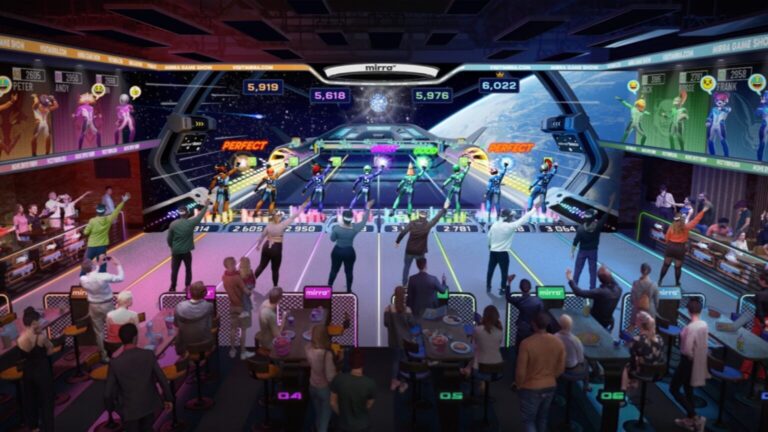
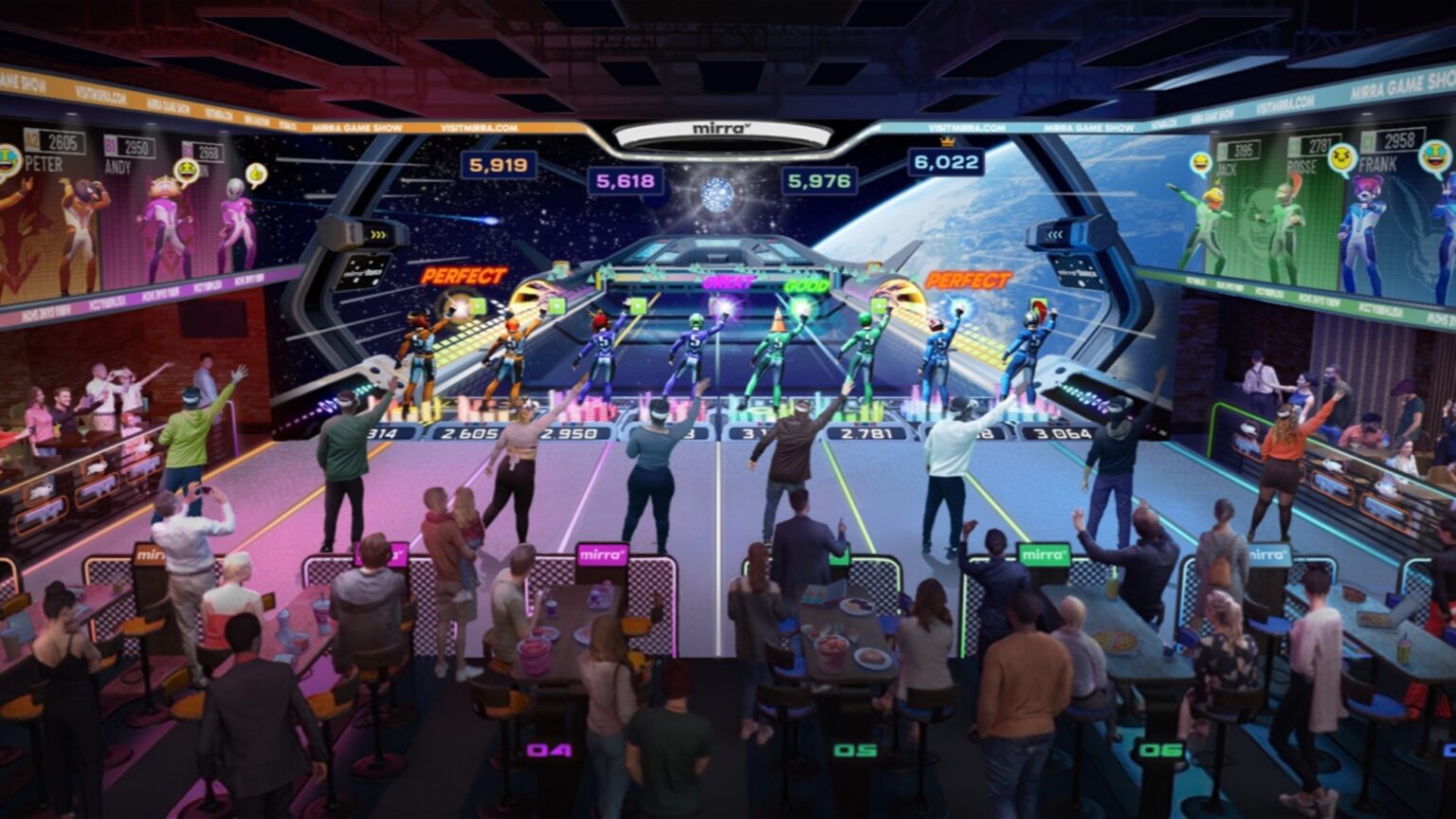
Above: Mirra Immersive’s VR Party Game Concept
As a VR consultant, I spend a lot of time inside the P&L of location-based entertainment venues, and the fastest-growing ones right now have something most VR venues don’t: a bar.
Last month JLL research published a report on the retail real estate pipeline for LBE. It showed, with real numbers, how location-based entertainment is growing. Escape and challenge rooms were the fastest-growing segment at 247%, with competitive socialization coming in right behind at 84%.
JLL’s conflating challenge rooms with escape rooms is flawed. They lump challenge rooms in with escape rooms because of “lineage”. They call them “one and done” experiences, of which challenge rooms are the evolved versions. Team vs the room, timed, mission-based, ticketed sessions.
Comparatively, competitive social venues are considered “bar sports.” Puttshack, Flight Club, and Holey Moley are pubs in a casual gaming wrapper. Turn-based games are a social lubricant, and food and beverage is the P&L driver.
But the reality is many of these new challenge rooms have bars and food as a core component, averaging around 33% of total revenue. Puttshack reports the highest at 55%, but Funlab is pushing the envelope with Hijinx Hotel, incorporating three different bars into a hotel-themed concept that encourages guests to linger, drink, eat, and socialize between room sessions.
So the lines between challenge rooms and competitive social venues are as blurry as the 18th hole at Puttshack after a couple of Long Island iced teas.
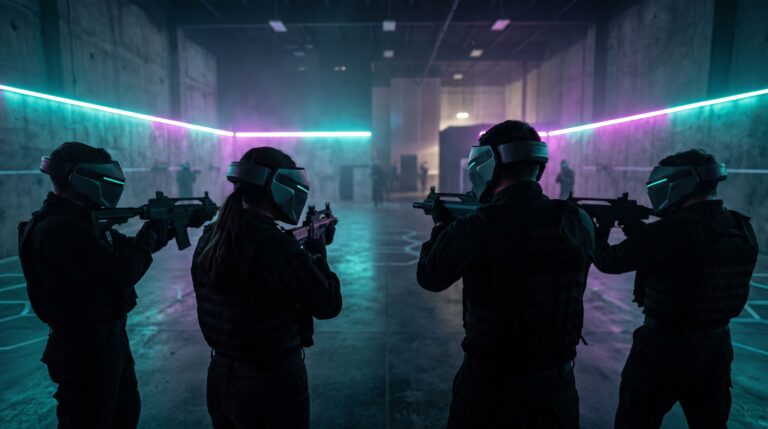
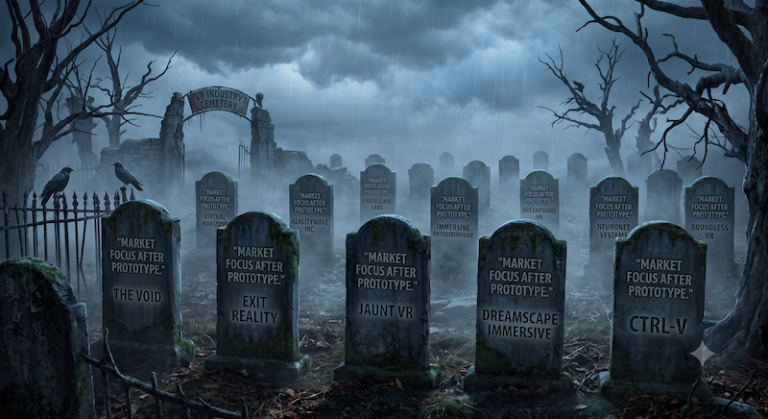
The JLL report showed virtual reality as a shrinking component of the mix. But that’s because they only report on chains with at least 3 locations. Most VR is single-unit, but that’s also a tell. If a VR venue was insanely profitable like some of these competitive social and challenge room concepts, they’d be expanding. After 10 years, VR is still primarily a cottage industry.
LEXRA’s research committee has been digging into the data. So far we have combed through 7 countries and found nearly 1,300 locations that ever existed, of which 37% have permanently closed — leaving about 800 open today. After you factor in a global pandemic and the fact that 50% of all small businesses fail in the first five years, it’s not as bad as you might expect. But the lack of multi-unit operators still suggests to me that margins are thin and ROI is slow.
Besides a level of profitability that encourages single units to become chains, what else is missing from most VR venues? Food and beverage. At best, you might get a soda or can of beer, a bag of chips, or an energy drink. Mirra Immersive is trying to change this with their turn-based games played in an arena designed for spectators with a full restaurant and bar operation wrapped around it. On a smaller scale, Fantail’s new Game Night could easily be played around a table at any local pub.
I suspect that because of the low cap ex of virtual reality attractions, it attracts operators that are scared off by the cost of getting the food and beverage operation. Commercial kitchens, bars, liquor licenses, and all that goes with them are expensive and complicated. VR looks relatively simple comparatively.
I’ve spoken to several operators who have invested a lot of money into VR venues, and every single one of them has told me afterward that they should have invested more in F&B. For example, Felix and Paul’s Interstellar Arc in Vegas opened without their bar and restaurant, which was planned and still in development at the time I interviewed Felix. He admitted they probably needed it more than they expected.
The current trend of VR attractions like Horizons of Khufu and Black Mirror Immersive doesn’t bank on repeat visitation or dwell time. Which is why they are currently touring the exhibits. At some point, when there’s enough content in the pipeline, I’m sure we’ll see more permanent venues that switch content, like movie theaters. But even movie theaters are reliant on food and beverage. With as much as 70% of their box office going upstream to content providers, their profits are heavily driven by snack bar, and now bar and dining purchases.
Sony Pictures acquired Alamo Drafthouse, where concessions reportedly make up more than half of revenue. Sony also just invested $100 million into Cosm, another immersive venue that is heavily skewed toward F&B. Most of the capacity of a Cosm venue is outside the big-screen theater.
Hopefully we see more experienced and capitalized operators coming into the XR market who are not afraid of food and beverage. Or investors willing to help existing venues transcend their concepts from pure VR into social entertainment. The technology is ready, the experiences are out there. We just need the right people to put it all together.