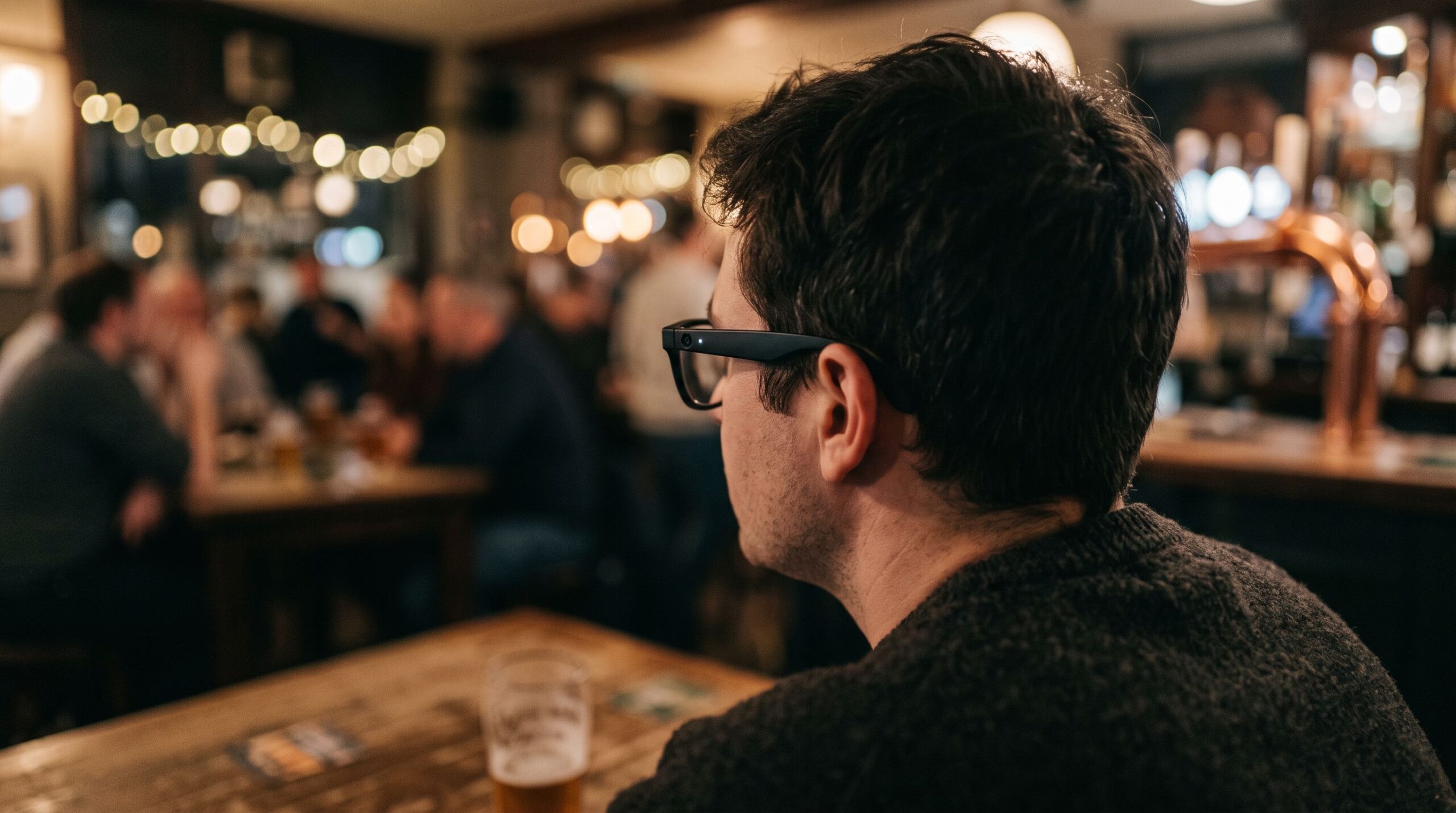
Meta put cameras on Ray-Bans, and the privacy panic arrived right on schedule. The Guardian is running a series: Restaurants, pubs and theatres banning them. “Pervert glasses” in the headline stokes privacy fears. Anyone with a pulse over the age of 35 should have seen this coming, because this experiment was done twice, once with camera phones and again with Google Glass. My VR consulting work is mostly about product launches, and this one is a case study in launching into a backlash you were warned about.
The hyperbole is that restaurants and theatres are banning smart glasses. Read the quotes, and what the venues said comes out as “we already have rules in place regarding this, and we will continue to enforce them.” Or not, as the case may be.
Tim Martin, CEO of the UK pub chain Wetherspoon, told the Guardian: “The general code that applies in our pubs, and most pubs, is that you can’t film customers or employees without their permission. Meta glasses seem to breach this code, and common sense, by enabling surreptitious surveillance, so our instinct is to say turn off the cameras. This is akin to our efforts to stop audible playing of videos in our pubs, which also invades people’s space.”
Nothing in that quote bans smart glasses any more than it bans smartphones. It restates a filming policy the chain already had and applies it to a new device. Can you imagine restaurants banning phones? The entire food porn industry would collapse.
What is driving the coverage is that the media hates Zuck and Facebook for gatekeeping their traffic, and it lives on rage and clicks. So it stokes the audience.
None of this is new. When flip phones added cameras in the early 2000s, the press coined “pocket paparazzi” almost immediately. There was a panic around upskirting and surreptitious photography in bathrooms, dressing rooms and gym locker rooms.
Then came the bans. Gyms and schools. The Pentagon, federal and state courts. Corporations locked down their sites, including, with some irony, Samsung, which banned camera phones across its semiconductor, flat panel and electronics plants in July 2003 for fear of industrial espionage, exempting only the Gumi factory where it built…wait for it…camera phones. South Korea and Japan required phones sold there to make an audible shutter sound so the unwary would know they were being photographed. In 2004 the United States passed the Video Voyeurism Prevention Act, making it a federal crime to capture images of a private area of a person without consent where they had a reasonable expectation of privacy. Saudi Arabia banned the sale of camera phones nationwide in April 2004 and reversed itself that December.
Eventually, well, you know the rest of the story.
In 2013, Google tried to sell the first smart glasses with a camera. People who wore them, including my friend Bob Scoble, got called glassholes. The product died in the consumer market, but the slur lived on. (I have to admit, it was clever.)
That is thirteen years of public evidence that a camera on your face will be received differently than a camera in your hand. Safeguards and a narrative about them should have been table stakes for the next company to try it.
Maybe Meta thought we had become so used to cameras everywhere, and they are everywhere, that glasses would not register. But it only takes a handful of people, a catchy term, and a media desperate for clicks to start a movement.
To be fair, Meta did ship a privacy light. Then they left it defeatable. You can cover it with a sticker, and a cottage industry grew up around desoldering the thing entirely, about $60 to make your glasses stealthy. People paid it. On purpose. So they could film strangers with the light off. Meta patched that on July 7 with a mandatory firmware update that disables the camera if the LED has been tampered with, which is the right fix, shipped in the middle of the news cycle it was designed to prevent. Gizmodo says it’s still sidesteppable.
Meta comes across as reactionary and defensive, which is never a good look. Meanwhile, way more perverts are using smartphone cameras than glasses. That 12x zoom in your pocket is a far bigger threat to a stranger’s privacy than a camera sitting on someone’s nose in plain view.
New AR glasses like Snap Specs and XREAL Aura will inherit this problem. Both have strong potential LBE applications but primarily target the consumer market. As we’ve seen with VR, B2B markets are not big enough to sustain these huge R&D and manufacturing budgets. LBE needs a healthy consumer market to keep access to the latest and greatest wearable technology. A privacy panic that suppresses consumer sales chokes out the pipeline our industry builds on.
Verse Immersive by Enklu built its venue experience on Microsoft HoloLens, a device that was never suited to location-based entertainment. As soon as Snap Specs dev kits became available, they switched as fast as they could. They were cheaper, easier to develop on, more durable, and user-friendly. They claimed that customer were more willing to wear glasses than VR headsets, and their demographic appeal backed that up. Their typical customer was a 50-year-old woman, vs a 12- to 35-year-old male for VR. Unfortunately, the company went out of business in June after failing to secure additional funding it needed to survive.
Whatever policy environment these devices ship into, LEXRA members are already committed to it. Just this month, at least three were admitted to XREAL Aura and Google’s Android XR Catalyst program, which gives developers early hardware, technical support and grants to get apps ready for the platform. They are building right now, on glasses that have received 10,000 preorders. And while that’s a great number, it’s nowhere near Apple’s 200K preorders for the Apple Vision Pro at 3X the price.
Meta already screwed up the metaverse vision, and has made a mess of the LBVR landscape. Its lack of a consistent, cohesive go-to-market strategy for its B2B business has led hundreds of operators and developers to waste millions of dollars on hardware and software that doesn’t work for the LBE market. It’s critical these companies get smart glasses right.
Eventually, a combination of technical changes, new societal norms, and our own short attention span will make cameras on glasses ordinary. Just like phones. If for no reason other than that more people like watching videos on TikTok than care about surveillance, stalking, or harassment. Well played, humans.
Mostly they’re restating filming policies they already had and pointing them at a new device. Wetherspoon’s code already said you can’t film customers or staff without their permission. The glasses didn’t change the rule, they just gave everyone a reason to read it out loud.
Plenty of reasons, including price and a thin reason to own one. But the one that killed it was social. Wearers got called glassholes, and no product survives its own customers being embarrassed to use it in public.
No, and venues may be where they work best. You control the space, you post the signage, you get consent at the door, and everyone inside already knows they’re on camera. Try arranging that on a sidewalk in Paris.